
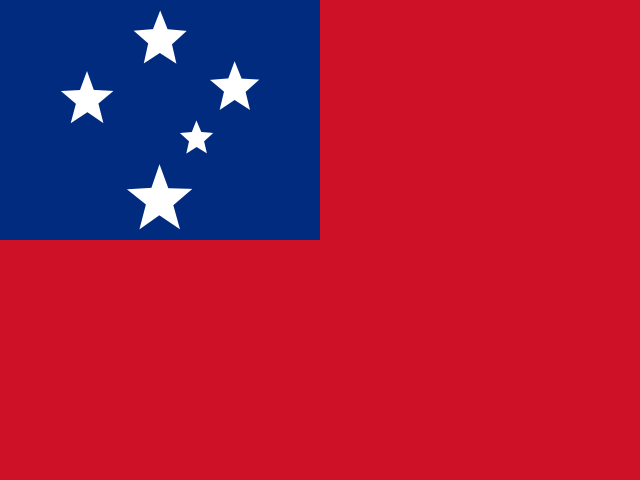
Samoa
Samoa is a volcanic island nation in the central South Pacific, dominated by the two main islands of Upolu and Savaiʻi. Both have rugged interiors shaped by ancient and relatively recent volcanic activity, with lava fields, steep ridges, waterfalls and extensive tropical rainforest. Savaiʻi is larger and less densely populated, with broad forested slopes rising towards Mount Silisili, while Upolu contains the capital Apia and most of the country's population. Coastal areas include mangroves, lagoons, reefs and plantations, with villages concentrated mainly along the shoreline. The climate is warm and humid throughout the year, with a wetter season from roughly November to April. Traditional village life and customary land ownership remain prominent features of the Samoan landscape and culture.
Overview
Samoa offers a distinctive collection of Polynesian forest birds and endemics, with the critically endangered Tooth-billed Pigeon (Manumea) its most famous species. Other important targets include Samoan Flycatcher, Samoan Triller, Samoan Starling and Mao, alongside several regional fruit doves and honeyeaters. Remaining forests on Savaiʻi and upland Upolu provide the most important habitat, while coastal areas add Pacific shorebirds and seabirds. The Manumea is extremely rare and should not be expected even on dedicated searches. Birding tourism is limited, with relatively few specialist guides or established birding sites, but the main islands have reasonable roads and accommodation. Forest access can be more complicated because much land is communally owned, making local permission or guidance useful. Samoa is best suited to birders interested in Polynesian endemics and relatively little-visited tropical forests.
Top 10 target species
| Species | Annual frequency | January | February | March | April | May | June | July | August | September | October | November | December |
|---|---|---|---|---|---|---|---|---|---|---|---|---|---|
| Samoan Starling Aplonis atrifusca | 47.7% | 31.8% | 53.7% | 46.1% | 48.7% | 49.9% | 42.2% | 63.2% | 55.6% | 57.3% | 43.7% | 45.9% | 34.2% |
| Samoan Myzomela Myzomela nigriventris | 44.6% | 35.9% | 29.5% | 44.9% | 44.8% | 49.2% | 43.1% | 49.7% | 47.6% | 58.6% | 49.6% | 43.1% | 38.6% |
| Eastern Wattled-Honeyeater Foulehaio carunculatus | 43.2% | 36.2% | 36.7% | 40.2% | 41.8% | 49.9% | 37.1% | 65.1% | 53.6% | 52.2% | 38.8% | 32.6% | 34.1% |
| Red-vented Bulbul Pycnonotus cafer | 43.0% | 48.7% | 29.3% | 44.2% | 51.3% | 45.4% | 45.1% | 26.0% | 38.7% | 48.9% | 47.3% | 52.6% | 38.6% |
| White-rumped Swiftlet Aerodramus spodiopygius | 37.8% | 24.1% | 37.4% | 35.0% | 36.3% | 42.1% | 35.0% | 40.1% | 47.1% | 41.2% | 43.3% | 38.5% | 33.2% |
| Buff-banded Rail Gallirallus philippensis | 36.6% | 43.6% | 27.3% | 45.1% | 37.9% | 37.4% | 35.9% | 20.8% | 36.8% | 42.8% | 47.6% | 28.6% | 35.3% |
| Polynesian Triller Lalage maculosa | 36.3% | 27.8% | 32.6% | 28.5% | 35.7% | 36.0% | 37.9% | 47.3% | 38.9% | 45.8% | 38.7% | 34.0% | 32.3% |
| Crimson-crowned Fruit-Dove Ptilinopus porphyraceus | 35.2% | 31.1% | 23.3% | 20.8% | 29.1% | 39.1% | 31.0% | 54.0% | 45.7% | 42.3% | 40.0% | 36.8% | 28.9% |
| Common Myna Acridotheres tristis | 34.7% | 43.2% | 40.8% | 43.2% | 28.2% | 27.8% | 32.1% | 16.7% | 27.3% | 29.8% | 39.0% | 49.9% | 38.9% |
| Blue-billed White-Tern Gygis candida | 34.2% | 33.6% | 34.5% | 46.5% | 38.7% | 22.5% | 23.2% | 10.3% | 30.5% | 36.5% | 46.1% | 44.0% | 43.6% |