
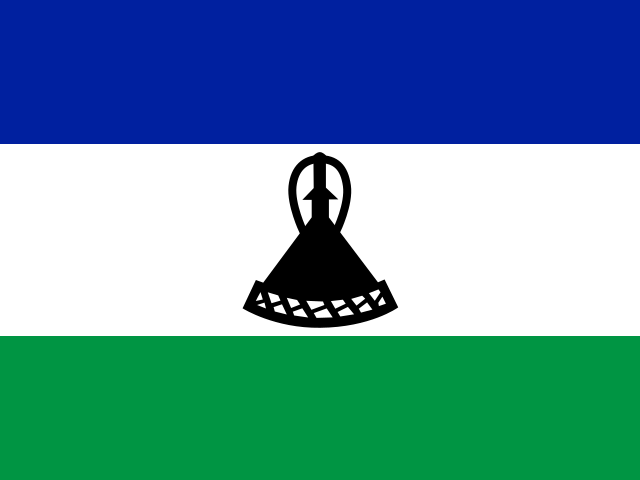
Lesotho
Lesotho is a high-altitude country almost entirely above 1,000 metres, dominated by the Maloti and Drakensberg Mountains. The eastern highlands contain rugged peaks, deep valleys and alpine grasslands rising above 3,400 metres, while the western lowlands are more gently rolling and extensively cultivated. Rivers originating in the mountains, including the Orange River, cut dramatic gorges through the landscape. Winters can bring heavy snow and severe cold to the highlands, while summers are warmer and wetter.
Overview
Lesotho is particularly rewarding for high-altitude Drakensberg specialties. Mountain areas support Drakensberg Rockjumper, Drakensberg Siskin, Ground Woodpecker, Sentinel Rock Thrush and Mountain Pipit, while cliffs provide habitat for Bearded Vulture and Cape Vulture. The highlands are also an important stronghold for Southern Bald Ibis, which breeds on inaccessible cliffs. Lesotho is often incorporated into South African birding itineraries, especially via Sani Pass, one of the best-known routes for accessing high-altitude species. Birding infrastructure within the country is fairly limited, but accommodation and local guiding are available. Mountain roads can be steep, rough and affected by snow or severe weather, and a 4WD is useful or necessary on some routes.
Top 10 target species
| Species | Annual frequency | January | February | March | April | May | June | July | August | September | October | November | December |
|---|---|---|---|---|---|---|---|---|---|---|---|---|---|
| Cape Sparrow Passer melanurus | 51.2% | 39.1% | 55.9% | 64.1% | 35.8% | 48.0% | 59.4% | 65.1% | 48.9% | 50.0% | 54.1% | 45.7% | 47.9% |
| Sentinel Rock-Thrush Monticola explorator | 40.0% | 38.0% | 40.4% | 34.5% | 31.8% | 29.5% | 48.1% | 33.0% | 47.6% | 34.6% | 55.7% | 49.2% | 37.8% |
| Cape Bunting Emberiza capensis | 39.3% | 36.7% | 36.8% | 42.4% | 26.1% | 32.9% | 38.5% | 38.8% | 49.7% | 26.9% | 52.9% | 50.7% | 38.8% |
| Drakensberg Siskin Crithagra symonsi | 38.3% | 23.4% | 35.4% | 39.6% | 23.5% | 41.2% | 47.6% | 24.1% | 61.1% | 34.5% | 50.7% | 42.2% | 36.0% |
| Speckled Pigeon Columba guinea | 35.8% | 26.5% | 46.2% | 55.4% | 24.1% | 37.6% | 38.5% | 34.8% | 46.7% | 35.7% | 35.5% | 23.4% | 25.0% |
| White-necked Raven Corvus albicollis | 35.0% | 33.0% | 35.8% | 38.1% | 22.7% | 32.9% | 31.9% | 43.4% | 41.4% | 23.5% | 43.0% | 39.3% | 35.1% |
| Sickle-winged Chat Emarginata sinuata | 33.9% | 35.3% | 43.0% | 39.4% | 20.0% | 22.3% | 22.4% | 11.6% | 33.2% | 38.1% | 52.8% | 48.3% | 40.0% |
| Southern Bald Ibis Geronticus calvus | 30.7% | 37.5% | 43.4% | 34.4% | 41.6% | 39.3% | 20.3% | 12.9% | 20.6% | 22.2% | 33.1% | 29.3% | 33.8% |
| Jackal Buzzard Buteo rufofuscus | 30.4% | 21.0% | 22.7% | 32.6% | 34.1% | 35.3% | 29.9% | 33.0% | 40.3% | 22.5% | 35.1% | 33.7% | 24.5% |
| Cape Wagtail Motacilla capensis | 29.7% | 27.5% | 31.9% | 37.1% | 20.0% | 32.2% | 14.9% | 26.0% | 38.4% | 30.9% | 32.4% | 37.7% | 27.3% |