
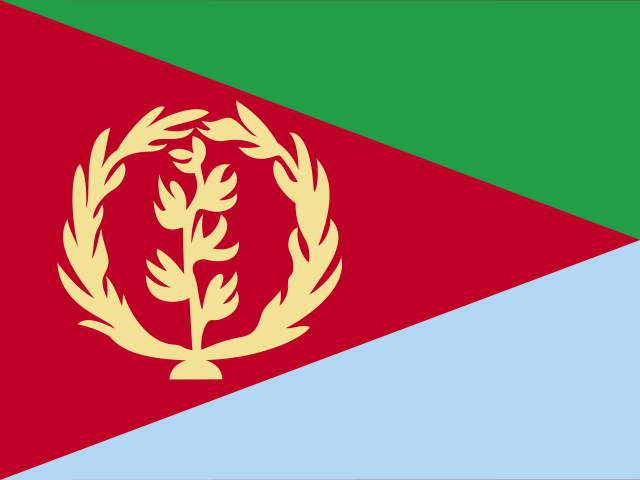
Eritrea
Eritrea stretches from the Red Sea coast to the Ethiopian Highlands, creating dramatic changes in elevation and climate over short distances. The central highlands, including the capital Asmara, rise above 2,000 metres and contain rocky mountains, cultivated valleys and remnants of montane woodland. Eastward, the land drops steeply through arid escarpments to the hot Danakil Depression and coastal plains. The Red Sea coast includes mangroves, mudflats and the Dahlak Archipelago, a large group of dry coral islands surrounded by reefs and shallow seas. Western Eritrea transitions into warmer savanna and semi-arid lowlands.
Overview
Eritrea is ornithologically underexplored and combines Horn of Africa highland specialties, arid-zone birds and important Red Sea seabird colonies. The central highlands support species such as White-cheeked Turaco, White-billed Starling, Rüppell's Black Chat and Abyssinian Woodpecker, while the dry lowlands hold bustards, sandgrouse, larks and wheatears. The Dahlak Archipelago and Red Sea coast are especially significant for breeding seabirds, including White-eyed Gull, Sooty Falcon, terns and boobies, and coastal wetlands attract migrant shorebirds. Eritrea receives very few international birders and tourism infrastructure outside the main centres is limited. Travel permits have historically been required for movement outside Asmara, and border areas may be restricted or unsafe; regulations and regional security conditions should therefore be checked carefully before travel.
Top 10 target species
| Species | Annual frequency | January | February | March | April | May | June | July | August | September | October | November | December |
|---|---|---|---|---|---|---|---|---|---|---|---|---|---|
| Speckled Pigeon Columba guinea | 43.5% | 47.5% | 54.2% | 42.1% | 52.5% | 75.0% | 37.5% | 9.4% | 0.0% | 70.8% | 36.0% | 34.8% | 62.5% |
| Laughing Dove Spilopelia senegalensis | 38.2% | 12.5% | 61.9% | 39.8% | 59.6% | 66.7% | 25.0% | 18.8% | 2.8% | 70.8% | 34.4% | 41.1% | 25.0% |
| Common Bulbul Pycnonotus barbatus | 37.3% | 57.5% | 44.6% | 44.2% | 22.9% | 70.8% | 50.1% | 15.6% | 2.8% | 29.2% | 27.2% | 44.6% | 37.5% |
| Baglafecht Weaver Ploceus baglafecht | 35.0% | 32.5% | 37.5% | 42.9% | 47.9% | 25.0% | 50.0% | 25.0% | 5.6% | 70.8% | 9.9% | 22.3% | 50.0% |
| Speckled Mousebird Colius striatus | 31.4% | 27.5% | 20.8% | 40.6% | 48.3% | 37.5% | 50.0% | 9.4% | 8.4% | 33.3% | 18.3% | 32.1% | 50.0% |
| Variable Sunbird Cinnyris venustus | 30.0% | 42.5% | 29.2% | 42.1% | 39.6% | 45.8% | 50.0% | 25.0% | 5.6% | 33.4% | 14.8% | 19.7% | 12.5% |
| Northern Fiscal Lanius humeralis | 29.4% | 25.1% | 42.9% | 32.9% | 48.3% | 66.7% | 37.5% | 3.2% | 5.6% | 45.8% | 15.8% | 16.1% | 12.5% |
| Swainson's Sparrow Passer swainsonii | 27.6% | 25.0% | 48.8% | 30.6% | 17.9% | 75.0% | 37.5% | 3.1% | 5.6% | 37.5% | 6.4% | 18.8% | 25.0% |
| Fan-tailed Raven Corvus rhipidurus | 26.2% | 55.0% | 29.2% | 38.8% | 40.0% | 66.7% | 25.0% | 3.1% | 0.0% | 25.0% | 12.4% | 18.8% | 0.0% |
| Red-cheeked Cordonbleu Uraeginthus bengalus | 24.3% | 12.5% | 11.3% | 31.5% | 30.4% | 54.2% | 25.0% | 18.8% | 11.1% | 25.0% | 14.8% | 32.1% | 25.0% |