
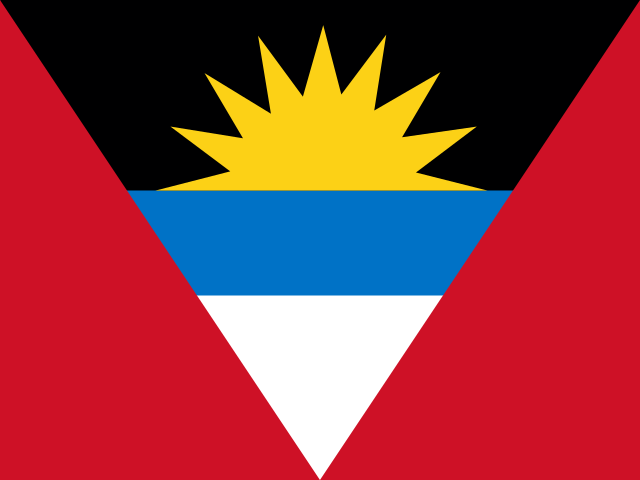
Antigua and Barbuda
Antigua and Barbuda is a small Leeward Islands nation consisting of two main islands and numerous smaller cays. Antigua is relatively dry and gently rolling, with low hills, scrub, woodland, agricultural land and numerous sheltered bays. Barbuda is flatter and less developed, with extensive limestone terrain, dry scrub, wetlands and beaches. The island's large lagoon and surrounding coastal habitats are among its most distinctive features. Both islands have a warm, relatively dry tropical climate influenced strongly by the surrounding Atlantic. Antigua is the more developed and densely settled island, while Barbuda retains a much more open character. Their combination of dry Caribbean vegetation and extensive coastal habitats distinguishes them from the wetter, mountainous islands farther south.
Overview
Antigua and Barbuda are most interesting for wetlands, seabirds and Caribbean island species rather than high overall diversity. Barbuda is the main attraction, particularly the Frigate Bird Sanctuary, which supports one of the largest colonies of Magnificent Frigatebirds in the Caribbean. The island's lagoon and coastal wetlands also attract herons, egrets, shorebirds and migratory species. Antigua's Christian Valley and surrounding woodland provide more typical terrestrial birding, while coastal areas add Brown Pelicans, terns and shorebirds. The islands are relatively easy to visit, with good tourism infrastructure and roads on Antigua; Barbuda requires a separate flight or boat connection and organised access is useful for the frigatebird colony. For a birder, the strongest reason to visit is the combination of large frigatebird concentrations and relatively accessible Caribbean coastal birding, rather than a long list of endemic species.
Top 10 target species
| Species | Annual frequency | January | February | March | April | May | June | July | August | September | October | November | December |
|---|---|---|---|---|---|---|---|---|---|---|---|---|---|
| Bananaquit Coereba flaveola | 55.8% | 54.5% | 63.1% | 65.7% | 59.1% | 62.1% | 53.7% | 49.4% | 50.0% | 46.3% | 56.1% | 56.6% | 52.8% |
| Gray Kingbird Tyrannus dominicensis | 52.4% | 50.3% | 53.7% | 48.3% | 45.9% | 47.3% | 54.0% | 51.3% | 56.9% | 56.7% | 56.4% | 56.8% | 50.8% |
| Zenaida Dove Zenaida aurita | 50.6% | 41.1% | 46.7% | 50.4% | 52.4% | 60.6% | 59.1% | 57.0% | 50.8% | 54.0% | 50.5% | 42.2% | 42.5% |
| Carib Grackle Quiscalus lugubris | 47.3% | 44.8% | 50.6% | 48.2% | 43.9% | 52.2% | 47.2% | 48.1% | 45.6% | 49.3% | 45.9% | 42.8% | 49.2% |
| White-crowned Pigeon Patagioenas leucocephala | 44.4% | 32.8% | 34.0% | 34.1% | 38.7% | 55.9% | 52.7% | 59.6% | 55.3% | 54.7% | 47.2% | 34.9% | 32.8% |
| Lesser Antillean Bullfinch Loxigilla noctis | 41.6% | 37.6% | 40.8% | 42.7% | 39.6% | 44.9% | 38.2% | 40.9% | 47.1% | 41.5% | 41.8% | 45.8% | 38.3% |
| Magnificent Frigatebird Fregata magnificens | 41.1% | 43.3% | 45.8% | 39.5% | 43.0% | 40.2% | 48.0% | 32.8% | 38.9% | 36.4% | 37.0% | 40.9% | 47.1% |
| Brown Pelican Pelecanus occidentalis | 38.1% | 45.7% | 49.5% | 40.2% | 36.5% | 33.2% | 37.9% | 31.4% | 28.8% | 31.5% | 33.2% | 42.4% | 47.2% |
| Great Egret Ardea alba | 33.8% | 41.5% | 39.1% | 31.3% | 31.9% | 27.0% | 27.1% | 29.0% | 25.6% | 39.1% | 35.1% | 39.4% | 39.5% |
| Laughing Gull Leucophaeus atricilla | 33.0% | 4.1% | 4.4% | 7.8% | 45.4% | 64.9% | 67.1% | 70.8% | 65.0% | 36.6% | 12.2% | 9.9% | 7.6% |