
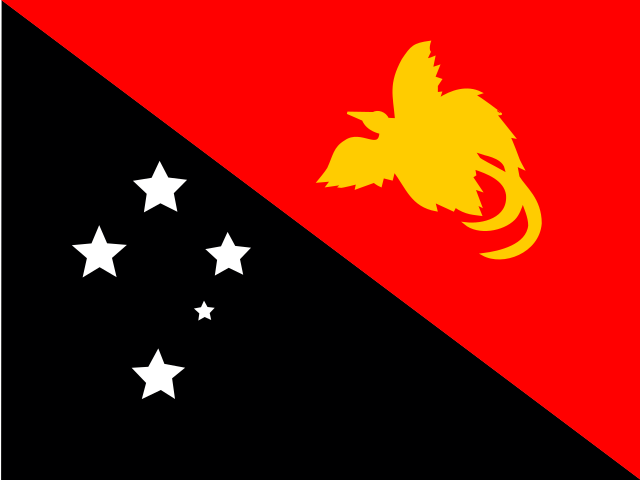
Papua New Guinea
Papua New Guinea occupies the eastern half of New Guinea, the world's largest tropical island, and is one of the most geographically and biologically diverse countries on Earth. The landscape ranges from lowland rainforest, mangrove and swamp to extensive mountain ranges, alpine grasslands and isolated valleys. The Central Highlands rise to more than 4,000 metres, while the rugged terrain and limited road network have left large areas relatively inaccessible. New Guinea's long isolation has produced exceptional levels of endemism, particularly among birds and plants, and many communities retain strong connections to traditional land use and local environments.
Overview
Papua New Guinea is a premier destination for Birds-of-Paradise, with more than 40 species occurring in the country, alongside bowerbirds, kingfishers, pigeons and other highly distinctive New Guinean groups. Key targets include Raggiana Bird-of-Paradise, Blue Bird-of-Paradise, King-of-Saxony Bird-of-Paradise and Twelve-wired Bird-of-Paradise. Varirata National Park near Port Moresby is one of the most accessible birding sites, while the Mount Hagen and Tari areas are famous for highland Birds-of-Paradise. The Bismarck and Louisiade Archipelagos add island endemics and seabirds. Birding tourism is well established but generally requires specialist guides, organised trips and careful logistics; roads are limited and independent travel can be challenging. For serious birders, PNG's combination of extraordinary endemism, spectacular courtship displays and difficult-to-access habitats makes it one of the world's most distinctive birding destinations.
Top 10 target species
| Species | Annual frequency | January | February | March | April | May | June | July | August | September | October | November | December |
|---|---|---|---|---|---|---|---|---|---|---|---|---|---|
| Willie-wagtail Rhipidura leucophrys | 26.3% | 28.0% | 35.1% | 40.7% | 16.5% | 21.5% | 24.2% | 29.7% | 29.7% | 26.9% | 20.6% | 14.1% | 28.4% |
| Helmeted Friarbird Philemon buceroides | 20.9% | 38.0% | 21.0% | 22.1% | 15.4% | 11.9% | 22.0% | 23.6% | 20.3% | 20.3% | 14.2% | 26.1% | 16.2% |
| Coconut Lorikeet Trichoglossus haematodus | 18.5% | 27.4% | 21.2% | 18.6% | 23.8% | 14.3% | 15.6% | 20.0% | 17.7% | 16.8% | 14.9% | 13.1% | 18.7% |
| Papuan Eclectus Eclectus polychloros | 16.7% | 23.8% | 18.7% | 17.4% | 14.2% | 10.2% | 16.6% | 21.4% | 20.6% | 19.3% | 11.3% | 15.8% | 10.6% |
| Pacific Swallow Hirundo javanica | 16.0% | 14.3% | 21.8% | 28.0% | 11.1% | 10.9% | 11.9% | 16.5% | 17.7% | 17.7% | 13.8% | 9.5% | 18.2% |
| Brahminy Kite Haliastur indus | 15.7% | 10.3% | 14.9% | 18.4% | 9.7% | 12.4% | 16.9% | 25.3% | 25.3% | 20.2% | 14.0% | 7.7% | 12.9% |
| Glossy Swiftlet Collocalia esculenta | 14.8% | 8.5% | 9.9% | 20.3% | 10.1% | 12.0% | 15.8% | 24.4% | 24.2% | 19.9% | 12.9% | 7.3% | 11.8% |
| Amboyna Cuckoo-Dove Macropygia amboinensis | 14.2% | 25.8% | 9.5% | 7.0% | 6.8% | 10.5% | 11.4% | 17.2% | 14.2% | 13.6% | 9.2% | 19.6% | 26.0% |
| Red-capped Flowerpecker Dicaeum geelvinkianum | 13.2% | 11.0% | 12.0% | 9.8% | 13.3% | 12.6% | 16.5% | 19.3% | 14.6% | 16.0% | 9.1% | 15.1% | 8.6% |
| Spangled Drongo Dicrurus bracteatus | 12.9% | 27.0% | 17.2% | 9.0% | 9.3% | 6.0% | 13.5% | 14.1% | 13.7% | 11.3% | 6.9% | 19.1% | 7.4% |