
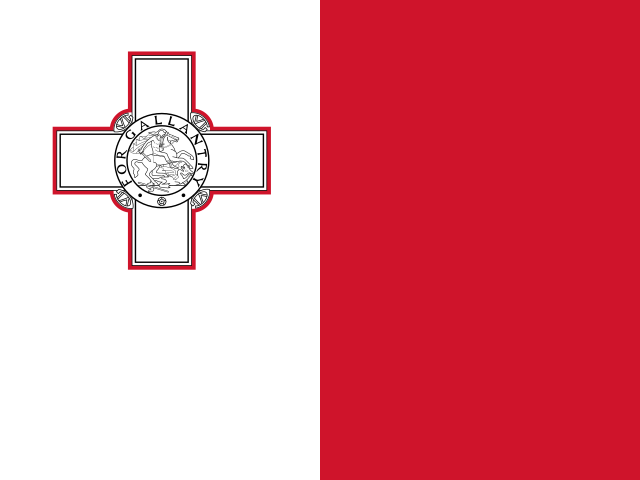
Malta
Malta is a small Mediterranean archipelago south of Sicily, centred on Malta, Gozo and Comino. Its low limestone landscape is characterised by rocky coastlines, sea cliffs, dry valleys, agricultural terraces and areas of Mediterranean scrub, with very little natural woodland. The islands have a typically Mediterranean climate, with hot, dry summers and mild, wetter winters. Freshwater habitats are scarce, making remaining wetlands particularly significant. Malta's strategic position between Europe and North Africa has strongly influenced its history, culture and densely settled landscape.
Overview
Malta is best known as an important Mediterranean migration stopover. Large numbers of passerines, raptors, herons and other migrants cross the islands during spring and autumn, with Buskett, Għadira Nature Reserve and Simar Nature Reserve among the principal sites. Raptors such as European Honey Buzzard and Western Marsh Harrier can occur in good numbers during passage, while coastal areas provide opportunities for shearwaters and other seabirds. Malta has few resident specialties, so migration timing is central to a birding visit. Its compact size and good road network make sites easy to reach, and several reserves have hides and visitor facilities. However, illegal bird killing remains a conservation issue, despite legal protections and active monitoring.
Top 10 target species
| Species | Annual frequency | January | February | March | April | May | June | July | August | September | October | November | December |
|---|---|---|---|---|---|---|---|---|---|---|---|---|---|
| Spanish Sparrow Passer hispaniolensis | 66.2% | 66.2% | 70.8% | 74.7% | 67.7% | 71.0% | 81.0% | 66.6% | 55.1% | 47.3% | 65.3% | 60.4% | 67.8% |
| Sardinian Warbler Curruca melanocephala | 42.2% | 48.8% | 44.5% | 53.1% | 51.9% | 46.4% | 39.1% | 28.0% | 23.7% | 38.4% | 43.1% | 41.0% | 48.5% |
| Yellow-legged Gull Larus michahellis | 36.3% | 40.2% | 36.8% | 40.1% | 38.9% | 41.1% | 34.8% | 39.0% | 38.0% | 25.3% | 31.6% | 27.5% | 42.1% |
| Rock Pigeon Columba livia | 34.1% | 22.4% | 24.1% | 31.2% | 26.4% | 31.9% | 53.4% | 48.0% | 27.1% | 29.1% | 45.6% | 31.7% | 37.7% |
| Zitting Cisticola Cisticola juncidis | 26.6% | 22.2% | 31.1% | 43.6% | 44.4% | 35.4% | 23.6% | 19.3% | 20.7% | 21.6% | 18.7% | 19.6% | 19.5% |
| European Robin Erithacus rubecula | 24.6% | 51.2% | 39.9% | 29.3% | 7.4% | 5.2% | 2.9% | 1.1% | 2.4% | 7.0% | 44.5% | 55.5% | 49.5% |
| White Wagtail Motacilla alba | 22.2% | 61.3% | 51.2% | 33.3% | 2.4% | 0.5% | 1.6% | 0.0% | 0.0% | 0.7% | 17.1% | 46.4% | 51.8% |
| Eurasian Collared-Dove Streptopelia decaocto | 20.0% | 17.5% | 23.9% | 17.0% | 21.0% | 27.2% | 29.8% | 15.8% | 19.6% | 10.8% | 25.9% | 17.7% | 14.2% |
| Barn Swallow Hirundo rustica | 18.7% | 1.7% | 4.9% | 30.7% | 51.2% | 30.3% | 12.4% | 6.8% | 13.3% | 43.8% | 27.1% | 2.2% | 0.5% |
| Blue Rock-Thrush Monticola solitarius | 16.0% | 15.2% | 15.0% | 27.8% | 24.6% | 25.5% | 18.2% | 8.7% | 5.3% | 16.5% | 11.7% | 11.2% | 12.2% |