
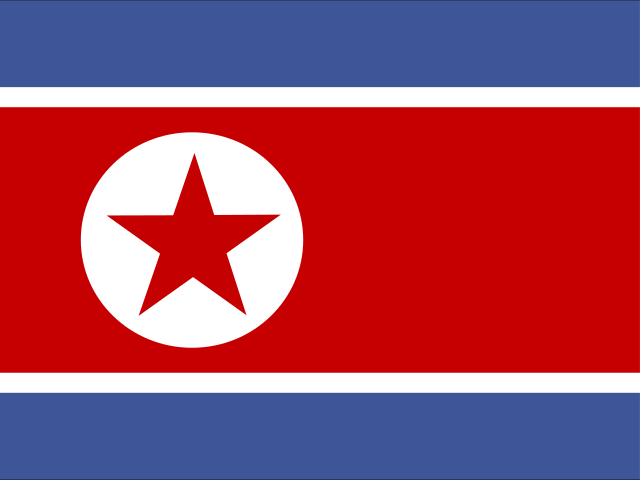
North Korea
North Korea occupies the northern half of the Korean Peninsula and is predominantly mountainous, with forested ranges, narrow valleys and relatively limited lowland plains. The highest mountains lie in the north, including volcanic Mount Paektu on the border with China, while the east is dominated by rugged ranges descending towards the Sea of Japan. Broader agricultural plains occur mainly in the west along rivers flowing towards the Yellow Sea. The coastline includes estuaries, tidal flats and numerous bays, particularly in the west. North Korea has a strongly seasonal continental climate, with cold, dry winters and warm, humid summers influenced by the East Asian monsoon.
Overview
North Korea lies on the East Asian–Australasian Flyway, making its western tidal flats and wetlands particularly important for migratory waterbirds. These habitats support threatened species including Black-faced Spoonbill, Far Eastern Curlew and Spoon-billed Sandpiper, while inland wetlands provide habitat for Red-crowned and White-naped Cranes. Forested mountains support a typical northeastern Asian assemblage of woodpeckers, tits and other woodland birds. From a birding-tourism perspective, however, North Korea is extremely difficult to visit. International tourism and entry conditions are subject to major restrictions and can change with little notice, while independent travel and unrestricted access to birding sites are generally not possible. Consequently, despite potentially significant habitats, North Korea is not currently a practical conventional birding destination.
Top 10 target species
| Species | Annual frequency | January | February | March | April | May | June | July | August | September | October | November | December |
|---|---|---|---|---|---|---|---|---|---|---|---|---|---|
| Oriental Magpie Pica serica | 31.4% | 37.5% | 25.0% | 26.7% | 61.7% | 52.7% | 20.2% | 25.0% | 0.0% | 25.0% | 40.0% | 62.5% | 0.0% |
| Eurasian Tree Sparrow Passer montanus | 23.6% | 15.6% | 25.0% | 26.7% | 58.8% | 51.2% | 22.2% | 0.0% | 0.0% | 0.0% | 18.8% | 64.4% | 0.0% |
| Oriental Turtle-Dove Streptopelia orientalis | 23.5% | 9.4% | 25.0% | 26.7% | 58.5% | 47.0% | 9.7% | 0.0% | 0.0% | 12.5% | 33.8% | 59.8% | 0.0% |
| Asian Tit Parus cinereus | 21.0% | 21.9% | 25.0% | 26.7% | 34.1% | 30.5% | 5.8% | 0.0% | 0.0% | 12.5% | 35.0% | 60.6% | 0.0% |
| Eurasian Kestrel Falco tinnunculus | 19.1% | 3.1% | 25.0% | 31.7% | 33.3% | 36.9% | 5.8% | 25.0% | 0.0% | 12.5% | 24.6% | 31.9% | 0.0% |
| Eastern Spot-billed Duck Anas zonorhyncha | 18.5% | 21.9% | 50.0% | 36.7% | 27.0% | 12.7% | 27.0% | 6.3% | 25.0% | 0.0% | 10.5% | 5.0% | 0.0% |
| Oriental Greenfinch Chloris sinica | 16.7% | 3.1% | 0.0% | 21.7% | 34.5% | 48.0% | 20.2% | 0.0% | 0.0% | 0.0% | 20.4% | 53.0% | 0.0% |
| Mallard Anas platyrhynchos | 14.6% | 9.4% | 37.5% | 41.7% | 19.6% | 3.6% | 26.9% | 0.0% | 0.0% | 0.1% | 25.4% | 11.0% | 0.0% |
| Black-tailed Gull Larus crassirostris | 14.1% | 6.3% | 0.0% | 44.2% | 15.4% | 11.4% | 28.5% | 6.3% | 25.0% | 0.1% | 20.8% | 11.3% | 0.0% |
| Great Egret Ardea alba | 13.4% | 0.0% | 0.0% | 23.3% | 16.2% | 8.5% | 16.7% | 25.0% | 50.0% | 0.1% | 14.6% | 6.3% | 0.0% |