
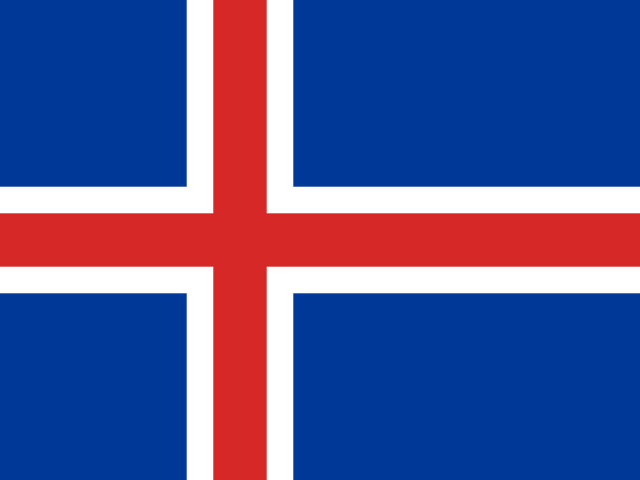
Iceland
Iceland is a volcanic island in the North Atlantic, shaped by glaciers, lava fields, geothermal activity and rugged mountains. Much of the interior forms a sparsely vegetated highland of volcanic deserts, ice caps and glacial rivers, while most settlement and agriculture are concentrated near the coast. Landscapes include extensive wetlands, grasslands, fjords, cliffs and black-sand shores, with relatively little woodland. Iceland lies directly on the Mid-Atlantic Ridge and remains geologically very active. Its cool maritime climate produces relatively mild winters for its latitude and short, cool summers, with highly variable weather throughout the year.
Overview
Iceland is one of Europe's outstanding destinations for seabirds, breeding waders and northern waterbirds. Spectacular cliffs such as Látrabjarg hold Atlantic Puffins, Razorbills, Common and Brünnich's Guillemots and Northern Fulmars, while wetlands across the country support abundant Black-tailed Godwits, Common Snipes, Red-necked Phalaropes and European Golden Plovers. Lake Mývatn is famous for its exceptional diversity of breeding ducks, including Barrow's Goldeneye and Harlequin Duck, two major Icelandic specialties. Gyrfalcon, Rock Ptarmigan and Great Northern Diver are further sought-after species. Iceland has excellent tourism infrastructure and is straightforward to bird independently by car, although weather and road conditions can change rapidly. Summer provides the richest overall birding, while winter offers different seabirds and Iceland Gulls.
Top 10 target species
| Species | Annual frequency | January | February | March | April | May | June | July | August | September | October | November | December |
|---|---|---|---|---|---|---|---|---|---|---|---|---|---|
| Mallard Anas platyrhynchos | 36.9% | 44.4% | 41.4% | 41.1% | 48.5% | 45.8% | 34.5% | 22.4% | 23.5% | 29.8% | 32.5% | 37.9% | 41.5% |
| Redwing Turdus iliacus | 35.8% | 17.9% | 14.7% | 17.2% | 49.0% | 46.3% | 44.1% | 40.9% | 34.9% | 43.4% | 55.5% | 41.5% | 24.4% |
| Common Eider Somateria mollissima | 31.2% | 32.5% | 33.4% | 33.4% | 30.3% | 36.1% | 37.1% | 33.3% | 30.9% | 27.6% | 24.5% | 25.4% | 30.7% |
| Black-headed Gull Chroicocephalus ridibundus | 28.9% | 19.5% | 17.7% | 16.2% | 36.1% | 46.5% | 40.6% | 42.5% | 35.3% | 31.1% | 24.8% | 18.6% | 17.7% |
| Common Raven Corvus corax | 26.6% | 43.4% | 40.7% | 33.5% | 22.1% | 16.3% | 13.8% | 12.8% | 14.3% | 18.1% | 28.2% | 35.3% | 40.1% |
| European Herring Gull Larus argentatus | 26.2% | 32.4% | 30.6% | 27.8% | 25.0% | 23.8% | 20.0% | 21.3% | 27.0% | 27.1% | 24.4% | 25.6% | 29.1% |
| Great Black-backed Gull Larus marinus | 26.0% | 29.7% | 28.1% | 27.1% | 25.8% | 25.4% | 23.6% | 23.5% | 26.4% | 27.9% | 23.8% | 23.4% | 27.6% |
| Redpoll Acanthis flammea | 25.3% | 30.9% | 28.6% | 25.5% | 20.7% | 17.9% | 16.1% | 16.8% | 18.7% | 21.8% | 34.1% | 37.9% | 34.2% |
| Graylag Goose Anser anser | 20.9% | 11.0% | 9.7% | 11.6% | 44.8% | 44.1% | 29.9% | 15.8% | 21.6% | 24.5% | 19.6% | 9.7% | 8.1% |
| Red-breasted Merganser Mergus serrator | 19.5% | 25.7% | 26.0% | 21.5% | 21.4% | 27.0% | 23.5% | 12.7% | 8.8% | 13.7% | 14.8% | 15.6% | 23.2% |